More invites isn't enough. A smart referral program only rewards when there's real revenue, growing paying users instead of free freeloaders.
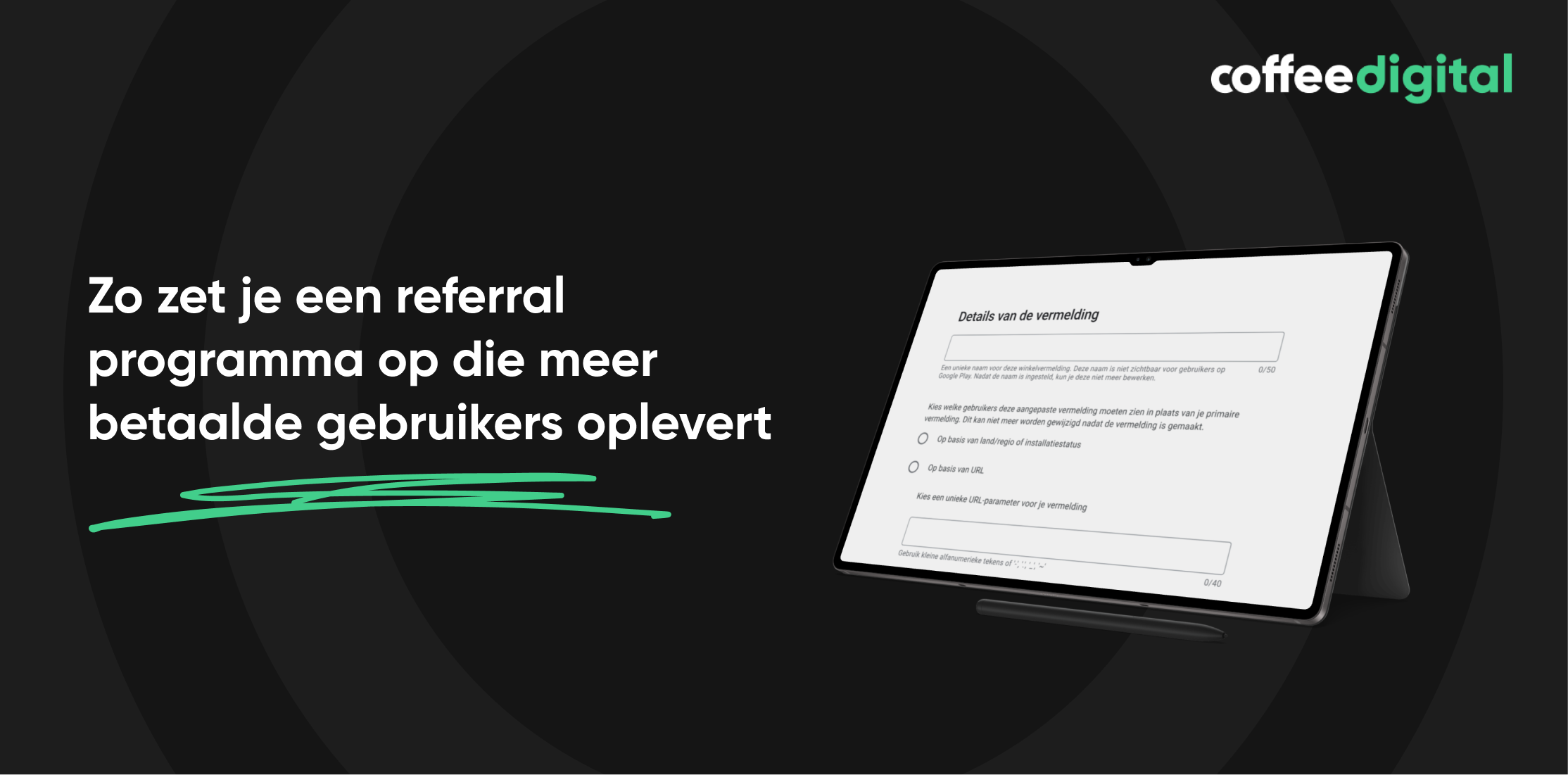
How to set up a referral program that delivers more paying users
For Dutch apps and SaaS companies today, it's no longer just about reach, but about more efficient growth. Referral programs are ideal for that. You reward existing users for inviting a friend. But: a referral program only really works when it attracts paying users, increases your k-factor, and fits perfectly with product-led growth. The k-factor indicates how many new users one existing user brings in on average through referrals. Those who still reward on sign-up are mainly buying vanity volume. The real gain lies in a referral loop that puts activation, payment, and lifetime value at the center."

1. Reward only after revenue, not after a free sign-up
A referral program only grows well when you tie rewards to revenue, not to a click. Do you already reward at sign-up? Then you can expect a lot of free freeloaders. According to payproglobal.com a strong referral loop increases lifetime value, because referred customers are often more loyal. In subscription models, that value is even 16 to 25 percent higher than for organic users. Without controls against abuse, that advantage drops back by 10 to 20 percent. Your direct gain? Only pay out after the first payment, purchase, or an active subscription.
Here's how to approach this smartly: focus on just one payout condition, a first genuine payment action. Then add a basic check, such as an active account or usage after a short period. This way, you avoid rewarding empty sign-ups. Also, immediately check your current referrals from the past month, which ones generated revenue, and which ones just accounts?
Sources: Coffee Digital, PayPro Global

2. Build a referral loop with milestones and double rewards
What works better? A referral program with milestones. Zendesk ties rewards to demos, training, and only afterward to the paid purchase. This filters out quick bonus hunters. Google Workspace does something similar in the Dutch market with a double-sided model: the referrer gets a reward, the new customer gets a discount. That's smart, because such incentives deliver up to 3 times higher conversion than a single-sided approach. Add a 30-day activity check to that. Then your referral loop grows much more healthily.
So the real question isn't whether you give a reward, but when and to whom. If double-sided incentives convert up to 3 times better, why would you still pay out without an activity check or a second milestone? That's usually where the first leak occurs.
Want to make this practical? Sketch out your flow on a single sheet of paper. Step 1, invitation. Step 2, first valuable action. Step 3, payment. Only then tie in the full reward. Also give the new user something immediately tangible, such as a discount or extra usage time. This way, you lower the entry barrier while keeping better control over the quality of referrals.
Sources: Coffee Digital, Zendesk, Google Workspace
3. Measure k-factor and lifetime value, not just referrals
Do you want to know if your referral program really works? Then look at your k-factor, not at isolated sign-ups. The k-factor indicates how many new users one existing user brings in on average through referrals. If it's above 1, then each user brings in more than one new user on average, giving your app a true virality loop for organic growth. According to payproglobal.com, referrals often lower your acquisition costs by 30 to 50 percent compared to paid channels, but only if sharing feels frictionless. So place your referral link in the onboarding, right after a moment of success, and measure the lifetime value of referred users separately.
This is exactly where many referral loops break down. You see sign-ups coming in, but do you also know how many new paying users one existing user really brings in? Without that k-factor, you're steering on activity, not on viral growth, and that difference often costs unnecessary budget.
Don't just look at how many people share, but at what happens afterward. Which users invite others, and exactly when? That shows you where your best sharing moment is. Do you have a B2C app? Then test a simple discount. Are you selling SaaS? Then try a benefit that lasts longer. What works for your users, you'll only find out once you measure this separately.
Sources: Coffee Digital, PayPro Global

4. Let product-led growth drive your word of mouth strategy
Referral only works if your product deserves it. Do you have weak onboarding, or do new users drop off quickly? Then no reward will help. Product-led growth means that your product itself drives acquisition, activation, and retention, and that the referral loop feels like a native feature, not a separate campaign. According to payproglobal.com, the real power lies in trust: someone only shares once the value is already clear. So make sure users experience a moment of success in their first session, and only then show your word-of-mouth strategy.
So the real work already starts before your referral program goes live. If referred users only become more valuable once onboarding and activation are on point, how can you be sure your product already deserves a sharing moment? That question determines everything that follows.
As mentioned earlier, referral only really works once your product first clearly makes its value felt. So combine strong onboarding with smart reward moments, a benefit for both sides, and measurements on paying users, not on isolated sign-ups. By combining these steps, you attract fewer freeloaders and more customers who stay. That reduces waste, increases revenue, and makes your growth much more predictable. Time to set it up properly!
Sources: Coffee Digital, PayPro Global
Our role in this
At Coffee Digital, we translate these kinds of growth challenges into a tight, data-driven testing approach. This approach previously helped apps like Gimi achieve 4,000 new paid annual subscriptions in three months, by sharpening the route from first impression to paid conversion. The same applies to referrals: only once activation, measurement points, and reward moments are aligned does revenue grow along with it. Want to spar about it for a bit? Neem contact op met de marketeers van Coffee Digital.